
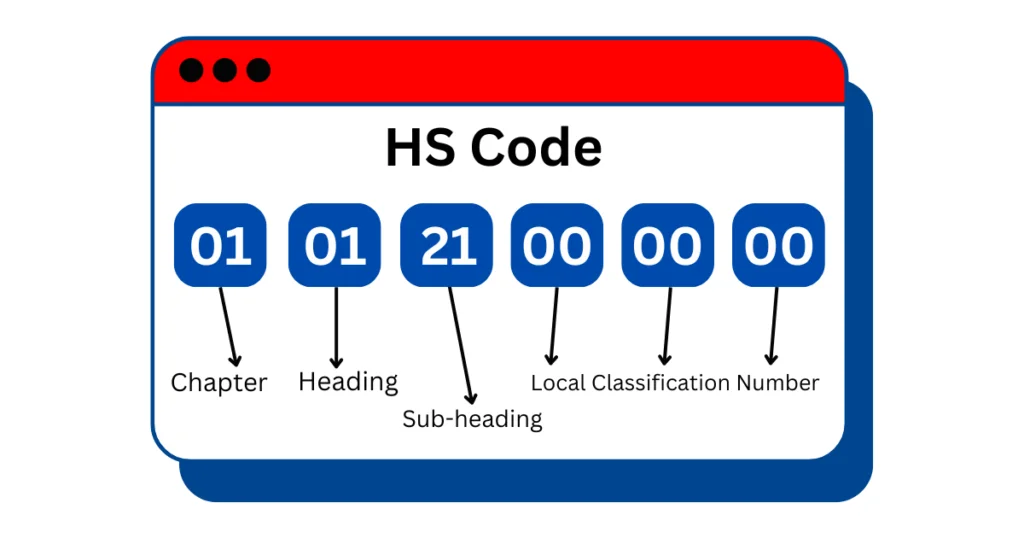
One of the most critical steps in international trade and customs clearance is accurately determining the product’s customs code. Globally, this system is known as the HS Code (Harmonized System Code), while in Armenia and EAEU countries, it is referred to as the FEACN Code (Foreign Economic Activity Commodity Nomenclature).
Selecting the correct code determines the amount of customs duties and VAT you will pay, required permits or certificates, and eligibility for tariff preferences.
In this guide, we provide clear steps to find the correct customs code for your shipment.
1. Structure of an HS / FEACN Code
A full EAEU FEACN code consists of 10 digits:
- First 2 Digits: Commodity Chapter (e.g., 84 — Machinery and mechanical appliances).
- First 4 Digits: Commodity Heading.
- First 6 Digits: Commodity Subheading (Global International HS Standard).
- All 10 Digits: Full EAEU National Commodity Subheading, which defines specific duty rates and regulatory requirements.
2. Steps to Find Your Product's Customs Code
Step 1: Check Supplier Documentation
Invoices, Packing Lists, or Certificates of Origin provided by foreign suppliers often state the 6-digit international HS code. This serves as a great starting point, though it must be extended to the 10-digit EAEU format.
Step 2: Use Official Search Portals
- Trade.gov.am / Customs.am: Official portals of the State Revenue Committee of Armenia offering commodity nomenclature search tools.
- Eaeunion.org: The official EAEU portal allowing keyword and chapter searches across member states.
Step 3: Analyze Essential Product Attributes
To assign the correct code, you must identify:
- Material composition (e.g., plastic, wood, or stainless steel).
- Primary function and industrial application.
- Product state (e.g., raw material, semi-finished, or finished retail product).
3. Common Classification Pitfalls
- Relying solely on product names: Similar items may have entirely different codes depending on power output, capacity, or composition.
- Intentional misclassification: Attempting to use a lower-duty code is classified as a customs violation, leading to financial penalties and shipment holds.
4. How to Ensure 100% Classification Accuracy
If your product is complex or multi-component, two primary options exist:
- SRC Preliminary Decision: You can submit an official application to the State Revenue Committee (SRC) of Armenia for a preliminary classification decision, which is legally binding.
- Consulting a Customs Broker: Professional brokers can rapidly analyze technical data sheets and accurately determine the correct code.
Summary
Correct HS code identification is the foundation of safe and compliant import operations.
In many cases, consulting a customs broker is essential for proper clearance and code selection. You can submit your request for free on brokers.am to receive multiple competitive offers from experienced customs brokers and choose the option that best fits your business needs.
Frequently Asked Questions (FAQ)
Q1. What is an HS Code (FEACN)?
A: An HS Code (Harmonized System Code) or FEACN code is a 10-digit numerical classification used in international trade to classify goods and determine applicable customs duty rates and regulations.
Q2. What happens if an incorrect HS code is selected?
A: Declaring an incorrect HS code can lead to duty reassessments, administrative fines, delays at the border, or confiscation of goods.
Q3. How can I get official binding confirmation for an HS code?
A: You can apply to the State Revenue Committee (SRC) of Armenia for a Preliminary Classification Decision, or consult a licensed customs broker.